Modern Perl at OpenTech

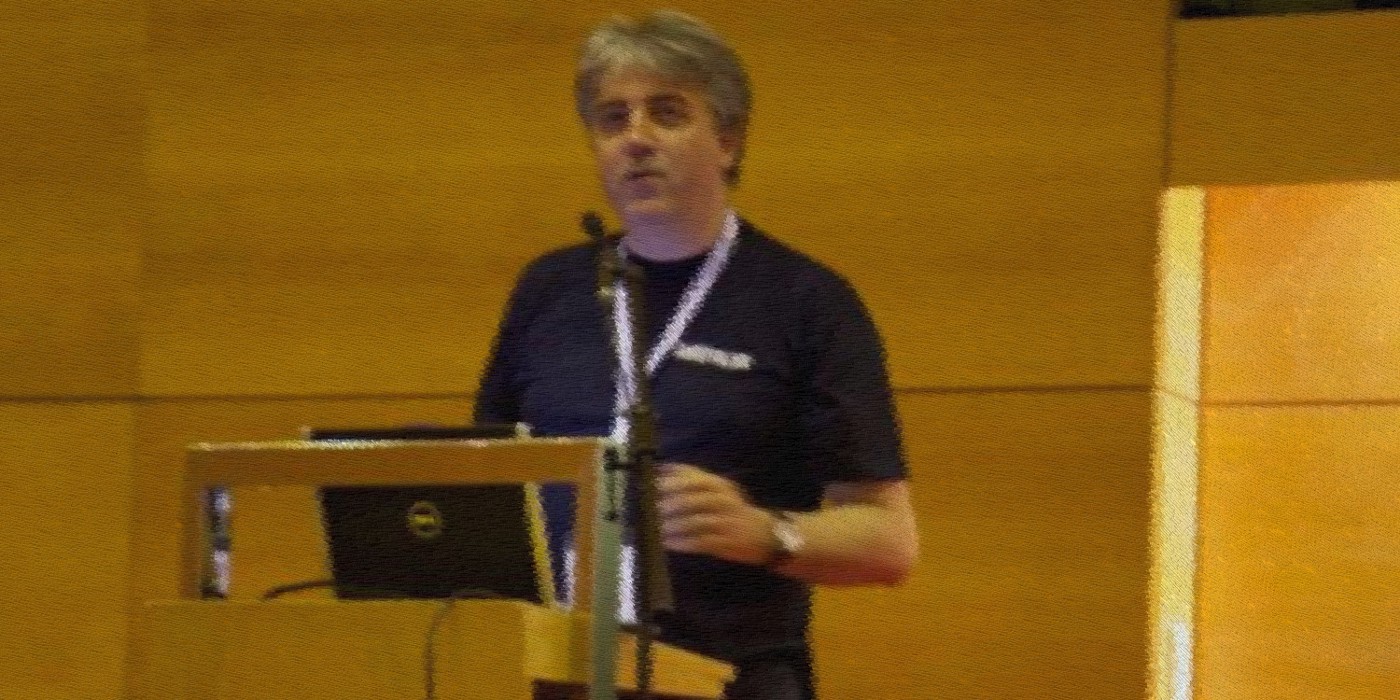
I mentioned a few months ago that I'd be running an "Introduction to Modern Perl" training course at YAPC::Europe this year. But in the interests of speaking outside of the Perl community as much as possible, I'm also going to be giving a slightly different version of that course at the OpenTech conference in London in September.

I say "slightly different", but that's a bit of an understatement. The original training course runs for six hours. The OpenTech talk is twenty minutes. But hopefully that will be long enough to introduce some people to many of the interesting things that are going on in the Perl world.

It you're going to be in London in September, then the OpenTech conference is always a lot of fun. I highly recommend that you come along. It's cheap too - just a fiver on the door.

YAPC::Europe Talks Accepted

The YAPC::Europe organisers said that they would tell speakers which talks had been accepted on July 1st. Well, it seems that the excitement was too much for them and they decided to do it a week earlier. Yesterday I got email telling me that some of my talks had been accepted and the list of accepted talks is now on the web site. As always, it looks like a really interesting conference.

I've had two twenty-minute talks accepted:

The Perl Community
The Perl community is a complex and interesting city. I've been exploring it for almost fifteen years and I'm not sure that I've been to every corner of it.

In this talk I'll attempt to guide you round some of the more interesting and useful parts of the Perl community. I'll point out some ancient monuments, some nice new areas and warn you about some places where you really shouldn't walk alone after dark.

Things I Learned From Having Users‎
When I first started releasing modules to CPAN it was great. I released modules that no-one used. I could release new versions as and when I wanted to.

Then people started using a couple of my modules. I started to get email about them. Suddenly my modules were no longer just for me. I had to deal with users.

In this talk I'll discuss how having users effects the way that you develop and release software. I'll also look at a few ways to keep on top of things.

I'm also doing my first lightning talk for several years:

‎Perl Vogue‎

You might not believe it to look at us, but the Perl community is a deeply fashionable place. If you're not using the currently fashionable modules in your code then people will be sneering at you behind your back.

Join Dave Cross for a quick review of the history of Perl fashion.

See you in Pisa.

YAPC::Europe Talks

The Call for Papers for YAPC::Europe closes in four days. If you're thinking of giving a talk in Pisa then this weekend would be a very good time to give it some serious thought.

I proposed four talks last night. I'm hoping that the organisers won't choose more than two of them, but I like to give them a bit of choice. The titles are as follows:

  • The Perl Community
  • Web Services for Fun and Profit
  • Things I Learned From Having Users
  • Perlanet Update

I've also submitted a proposal for a lightning talk called "Perl Fashion". It's been several years since I've given a lightning talk, so that'll be an interesting experience.

Don't forget that there are also training courses (including my course on Modern Perl).

Looking forward to the conference very much. Hope to see some of you there.

How Not to Ask a Question

I received this email last week. I often get random email from people I don't know asking for help with Perl problems and I'm happy to help whenever I can (although I always point our that Perl Monks is going to get better answers in less time).

But if you're going to ask random strangers for help, you should probably make a bit more effort than this person did. I've reformatted it and corrected the English.

Hello sir,

I am new developer in perl scripting language using MVC Frame works, my doubt is how to write below query in MVC.

$query = "select belarc_update_dt
           from   Device
           where  belarc_update_dt  >  $expiry_date
           AND    belarc_update_dt <= $current_date
           AND    (scrapped_on > $current_date
                   OR scrapped_on = '0000-00-00')";

the above query how to write in mvc frameork can we please help me sir,

Thanks and Regards

How would you reply to mail like that?

Update: I asked which MVC framework he was using. He replied:

I am using CGI::Carp 'fatalsToBrowser' with linux shell.

At that point I gave up.

Ironman and XML::Feed

Sam Graham complains that since the Ironman feed switched to using Perlanet, the entries have been "mangled". By that he means that in some cases any HTML in feed entries is lost.

I think they're running up against this bug in XML::Feed (which is one of the modules that Perlanet uses to process the feeds it subscribes to). There's a patch in the bug report that I've applied to my local installation of XML::Feed and it seems to have fixed the problem.

Until the author releases a new version of XML::Feed that includes this patch, I recommend that anyone using XML::Feed (and that includes everyone using Perlanet) applies the patch for themselves.

More RPM Stuff

It's been a while since I wrote anything here. if anyone is keeping score I've probably failed the Iron Man challenge of posting something every ten days.

Don't have much to add here either but I thought some of you might be interested in a quick tweak I made to my spreadsheet of CPAN RPMs available for Fedora. It now lists all of the RPMs available across all of the repositories that I use and shows you which version of the module is available. I've also added the current CPAN version for all of these modules.

This gives me the information I need to do a few things that I've wanted to do for a while. In particular I should be able to script the automatic removal of RPMs from my repository when the official Fedora repository catches up with the version I'm carrying. I can also easily identify CPAN modules where the latest Fedora version (from any of the repositories) is lagging behind the CPAN version.

As always, the code is available on Github and patches are very welcome.

Update: And here's another spreadsheet covering CPAN RPMs available for Centos.

Training Update

The training courses for this summer's YAPC in Pisa have been announced. And my course on Modern Perl has been chosen. It's a one-day course on August 2th (just before the conference). It costs € 180. You'll be able to book once the payments system on the conference web site goes live.

Here's the description of the course from the YAPC site:

This course introduces the major building blocks of modern Perl. We'll be looking at a number of CPAN modules that can make your Perl programming life far more productive.

The major tools that we will cover will be:

  • Template Toolkit
  • DBIx::Class
  • Moose
  • Catalyst
  • Plack

We'll also look at some other modules including autodie, DateTime and TryCatch.

There are several other good courses running both before and after the conference. I'm sure there'll be something that you'll find interesting.

N.B: This is not an April Fool's joke!

Perl Books

Those of you who have been following my work for some time might remember that many years ago I took some interest in Perl books. I don't mean the kind of books that we all read (or, even write) with animals on the cover. I mean the kinds of terrible Perl books that at one stage seemed to take up over 90% of the space given over to Perl books in most bookshops. They had brightly coloured covers and made unlikely claims about how good you would be with Perl after an unfeasibly short period of time.

They all seemed to be written by people who didn't actually know anything about Perl and they were full of the most atrocious Perl code that I've ever seen. Of course they were all not just about Perl but were about CGI programming with Perl (as that's what everyone wanted to use Perl for ten years ago). It was easy to tell the quality of these books from the index. You just looked for mentions of "use strict", "use warnings" or CGI.pm. Most books ignored them completely. At the time Schwern had a "litmus test" for the quality of Perl books. It was list of bullet points that you could use to easily calculate how bad a Perl book was. I seems to have dropped off the internet at some point in the last ten years.

Last weekend I was in the centre of London and I went into a couple of large book shops that I haven't been to for some time. And it looks to me as though this problem has finally gone away. Looking at the Perl section in Foyles, for example, I saw a very few dodgy Perl books. Of course, there were far fewer Perl books of any quality than there would have been five or six years ago, but the ones that were left were pretty much all decent books.

My initial thought was that this was just another sign that Perl has lost the battle for the low-end web development market. People who want to hack up a web site no longer even consider using CGI programs written in Perl. These days those people would all use PHP. But it seemed to me that there weren't many "Learn PHP in 24 Hours" books on the shelves either. So perhaps the low-end web development market doesn't exist any more. Or, at least, perhaps it's not big enough to make it profitable enough for publishers.

I'll admit that my sample wasn't particularly big. And Foyles isn't exactly your average book shop. It caters for the higher end of the book-buying market. I wanted to test my hypothesis by looking at the computer books section in Borders over the road. But Borders has closed down. Another indication of the diminishing size of the book market.

I'm going to take this investigation further. I'll check out the computer section in some lower-end book shops. But just to give myself some closure I'm going to declare my campaign against bad Perl books to be over. We won in the end. But it may be a slightly Pyrrhic victory. 

Training in Pisa

The YAPC::Europe organisers have put out a call for training courses. They want a number of courses to offer to attendees in the couple of days before the conference. The call closed yesterday and I expect they'll be announcing the courses in a couple of weeks.

I've given training courses at the last couple of YAPC::Europes so I've sent in a proposal for a course. I'm hoping to run a new course called "An Introduction to Modern Perl". In this course we'll be looking at some of the tools that form the basis of all modern Perl programming. This will include Template Toolkit, Moose, DBIx::Class, Catalyst and Plack.

I hope that this sounds interesting to some of you and that you'll consider attending the course (if it gets accepted). Please keep an eye on the conference web site to see when the courses are announced.

And please consider holding off booking your travel and hotel until you've seen the selection of courses that will be offered before the conference.

I suppose now I should start thinking about some talks to give at the conference.

Crufty Old Perl

It's eighteen months since I wrote "Why Corporates Hate Perl" and it's worth pointing out that the company I discussed in that article which was dropping Perl in favour of PHP and Java is still employing as many good Perl programmers as it can find.

I talked in that article about some rather unsubtle social engineering that had been going on at that company. Management had started to talk about Perl as a "legacy language" in an attempt to persuade the business that they really don't want their applications written in Perl. That doesn't seem to have been as successful as I feared it would be.

But there's another kind of social engineering that I've seen going on. And this is happening at the developer level. I've lost count of the number of times I've been sitting in meetings with developers, discussing ways to improve the quality of crufty old Perl code when someone throws in the (more than half-serious) suggestion that we should just rewrite the whole thing using Rails or Django.

There seems to be this idea that switching to a new framework in a new language will act as some time of magic bullet and that suddenly all of our problems will be solved. There are so many ways that this perception is flawed, Here are my two favourites.

  1. The current system is old and crufty not because it's written in Perl, but because it was written by people who didn't understand the business requirements fully, didn't know their tools particularly well or were under pressure to deliver on a timescale that didn't give them time to design the system properly. Often it's a combination of all three. Given the time to rewrite the system from scratch, of course it will be better. But it will be better because the business is better understood and tools and techniques have been improved - not because it's no longer written in Perl.
  2. Frameworks in other languages are not easier to use or more powerful than frameworks in Perl. Anything that you can do with Rails or Django you can do just as easily with Catalyst. It's using a framework that's the big win here, not the particular framework that you use. Sure, if you're a Ruby house then using a Ruby framework will probably match your existing developers' skills more closely but if your current system is written in Perl then, hopefully, you have a team of people with Perl skills and that's going to be the language you'll want to look at.

I'm tired of Perl being seen as a second-class citizen in the dynamic languages world. I freely admit that there's a lot of bad Perl code out there (I'll even admit to writing some of it) but it's not bad Perl code because it's Perl, it's bad Perl code because it's bad code.

This is what the Perl marketing initiative is for. We need people to know that Perl is not the same language that they stopped using ten years ago. Modern Perl can compete with any of the features of any other dynamic language.

By al means, try to get the time to rewrite your crufty old systems. But rewrite them in Modern Perl. You'll enjoy it and you'll be really productive.

p.s. I should point out that I'm not talking about any specific client here. This is based on conversations that I've had at various companies over the last couple of years and also discussions with many developers in many pubs.